
A digital exam preparation platform designed to help users confidently assess readiness for the German citizenship test through structured practice and support signals.
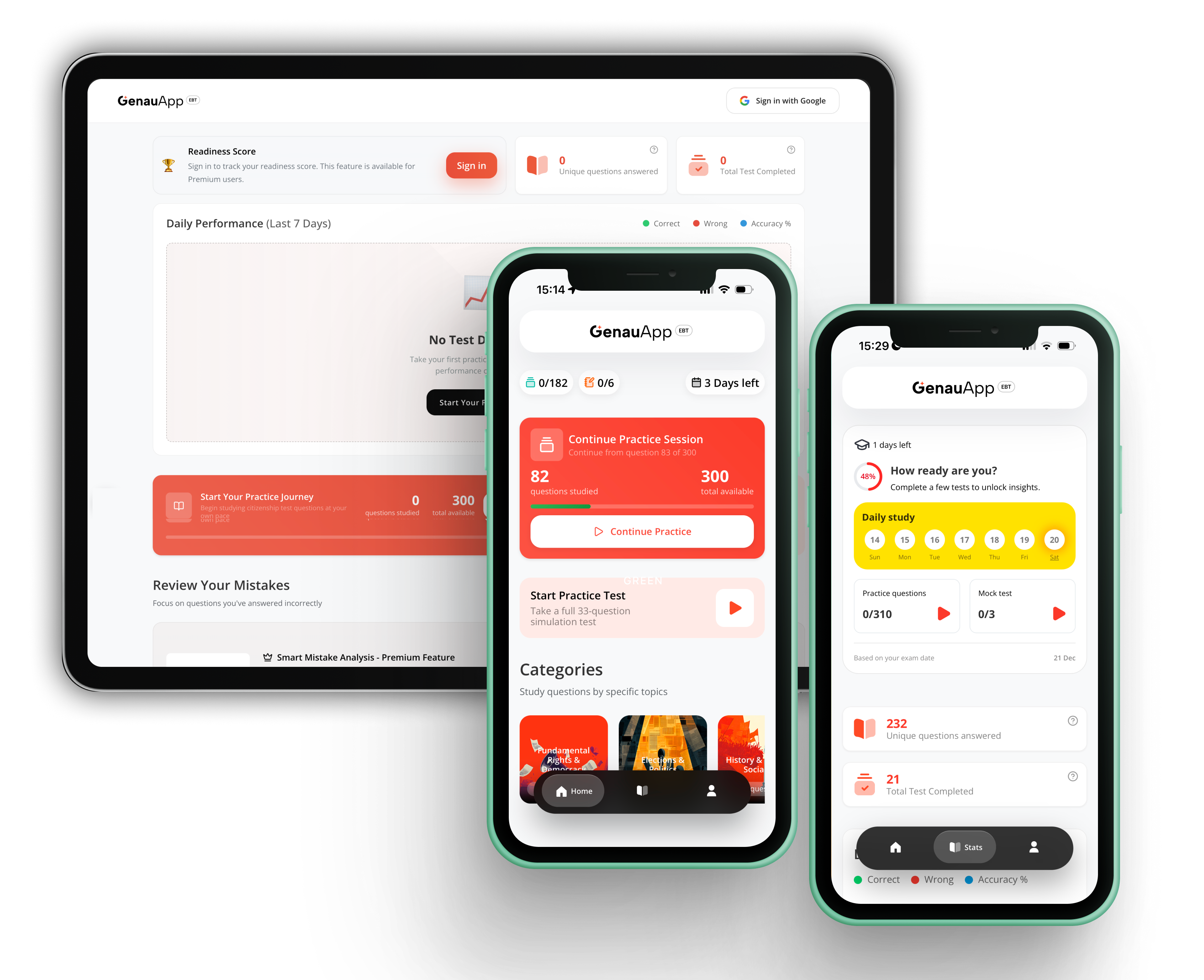
This project focused on designing the Einbürgerungstest (German Citizenship Test) preparation experience within GenauApp.
The challenge was to turn a static set of official questions into a decision-support product that helps users confidently determine whether they are ready to take a legally binding, high-stakes exam. The scope went beyond content delivery and required building trust, clarity, and realism into the experience.
The project was developed in a lean, cross-functional setup, collaborating closely with Engineering and Product.
While acting as the primary design owner, I worked hands-on across disciplines, aligning UX decisions with data structures, technical constraints, and long-term scalability. Given the small team setup, the role required both strategic leadership and tactical execution.
Problem
Users preparing for the Einbürgerungstest had access to all official questions but lacked clear signals to understand when they were ready to take the exam.
My Role
Prime Product Designer, owning problem framing, system design, UX architecture, and experience coherence end to end.
Impact
Delivered a structured, scalable exam-prep experience that improved user confidence, increased mock test completion, and established a clear foundation for monetization.
Framing the Real Decision
The core problem wasn’t knowledge gaps, but uncertainty about readiness. I reframed the challenge around confidence, risk, and commitment. This shifted the product from practice-oriented to decision-support.
Designing for Distinct User Mindsets
Users switch between learning and exam-simulation modes. I mapped these mindsets separately to avoid conflicting expectations. Each mode was designed to support a different cognitive and emotional state.
System-First Foundations
Early decisions focused on system rules and data structure. This enabled consistency across categories, languages, and future features. Designing the system first reduced complexity and rework later.
Fast Validation over Assumptions
Assumptions were tested through rapid, focused prototypes. I validated key flows before investing in full execution. This allowed faster decision-making with lower risk.
Evidence-Led Iteration
Iterations were guided by user behavior and qualitative feedback. I focused on patterns rather than isolated signals. This ensured improvements served long-term clarity, not short-term metrics.
#Validation
#Test
Preparing for the Einbürgerungstest is not just a learning task, it’s a high-stakes commitment decision with real consequences.
Users face 3 core challenges.
1st, limited language support makes it difficult to fully understand questions and answers, increasing cognitive load and uncertainty.
2nd, the lack of exam-date–driven planning prevents users from knowing how much to practice each day to be ready on time.
Finally, users struggle to identify knowledge gaps. Repeated exposure to already-known questions creates a false sense of progress, while frequently incorrect questions remain hidden. This leads to inefficient practice, wasted effort, and reduced confidence.
#Discovery

Early usage patterns and qualitative feedback revealed that users continuously shift between learning and exam-simulation mindsets, often within the same session. When the product failed to acknowledge this shift, users experienced confusion and loss of trust.
We observed that surfacing mistakes without context increased anxiety, especially in a high-stakes exam scenario. Users interpreted errors as failure rather than guidance, which reduced motivation and distorted their perception of readiness.
The strongest insight was that users trusted the product more when feedback felt instructional and directional, not evaluative. This led to a key reframing: progress should not answer “how much have I done?” but rather “how ready am I to take the exam?”
The solution was a system-driven exam preparation experience.
The design prioritized confidence, trust, and decision-making over engagement.
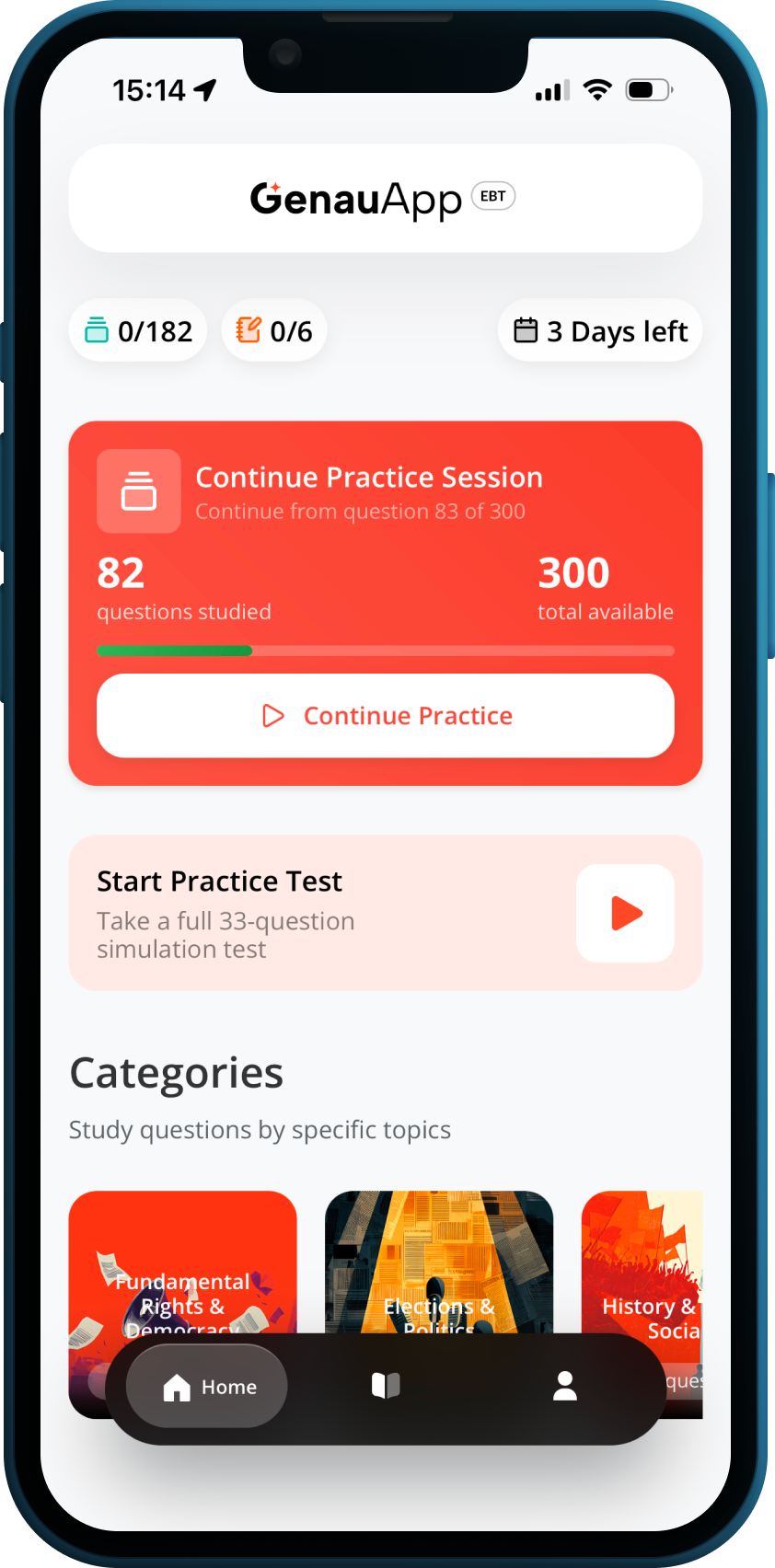
Practice & Mock Test Mode
Approach: Separated learning and exam simulation into distinct modes to support different user mindsets.
Rationale: Mixing feedback-heavy learning with exam-realistic pressure increased confusion and reduced trust. Clear mode separation improved confidence and expectation management.
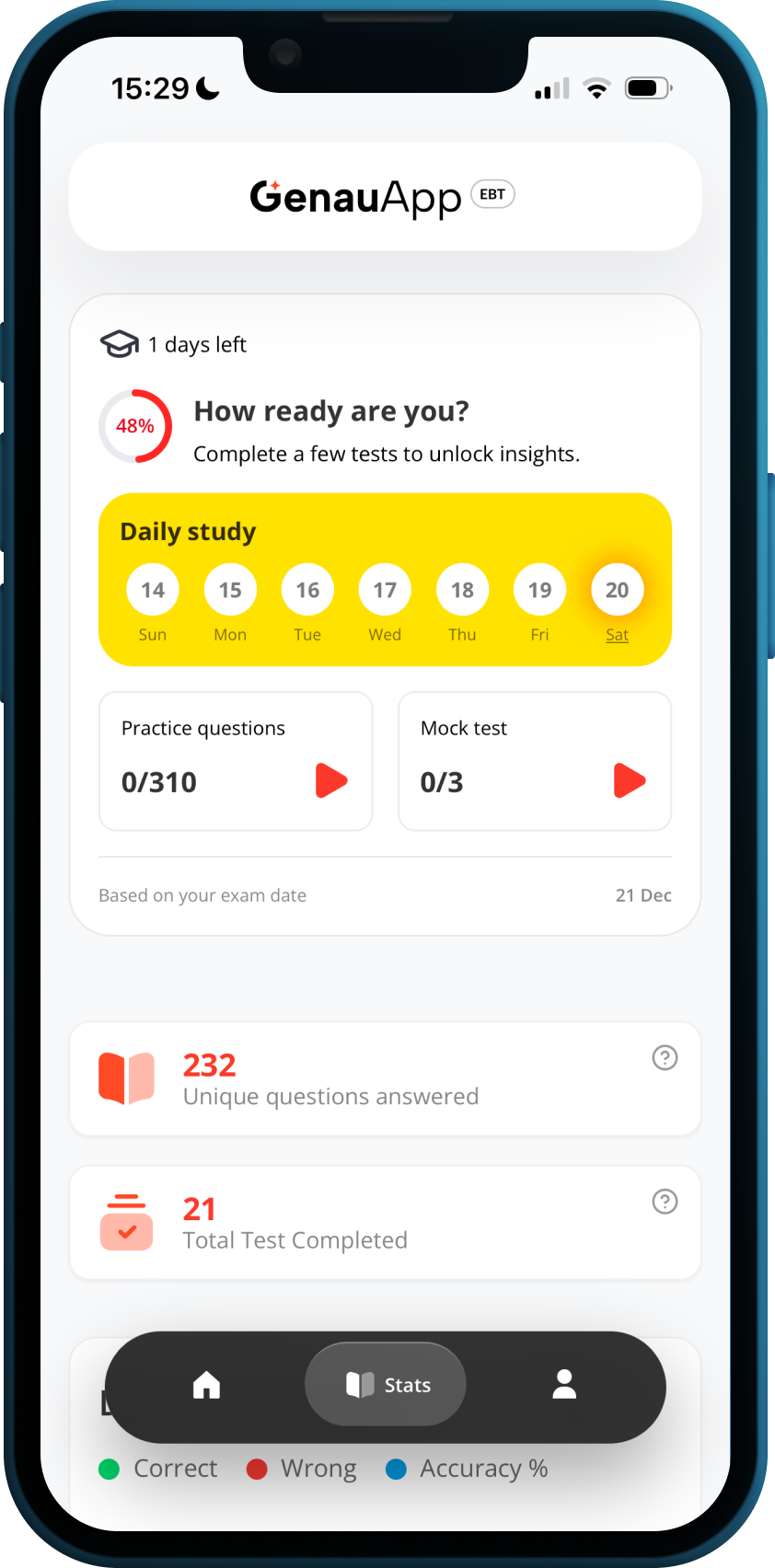
Readiness Score
Approach: Reframed progress from raw accuracy to readiness-based signals tied to exam timing and behavior.
Rationale: Accuracy alone failed to indicate preparedness and often created false confidence or anxiety. Readiness signals better supported decision-making in a high-stakes context.
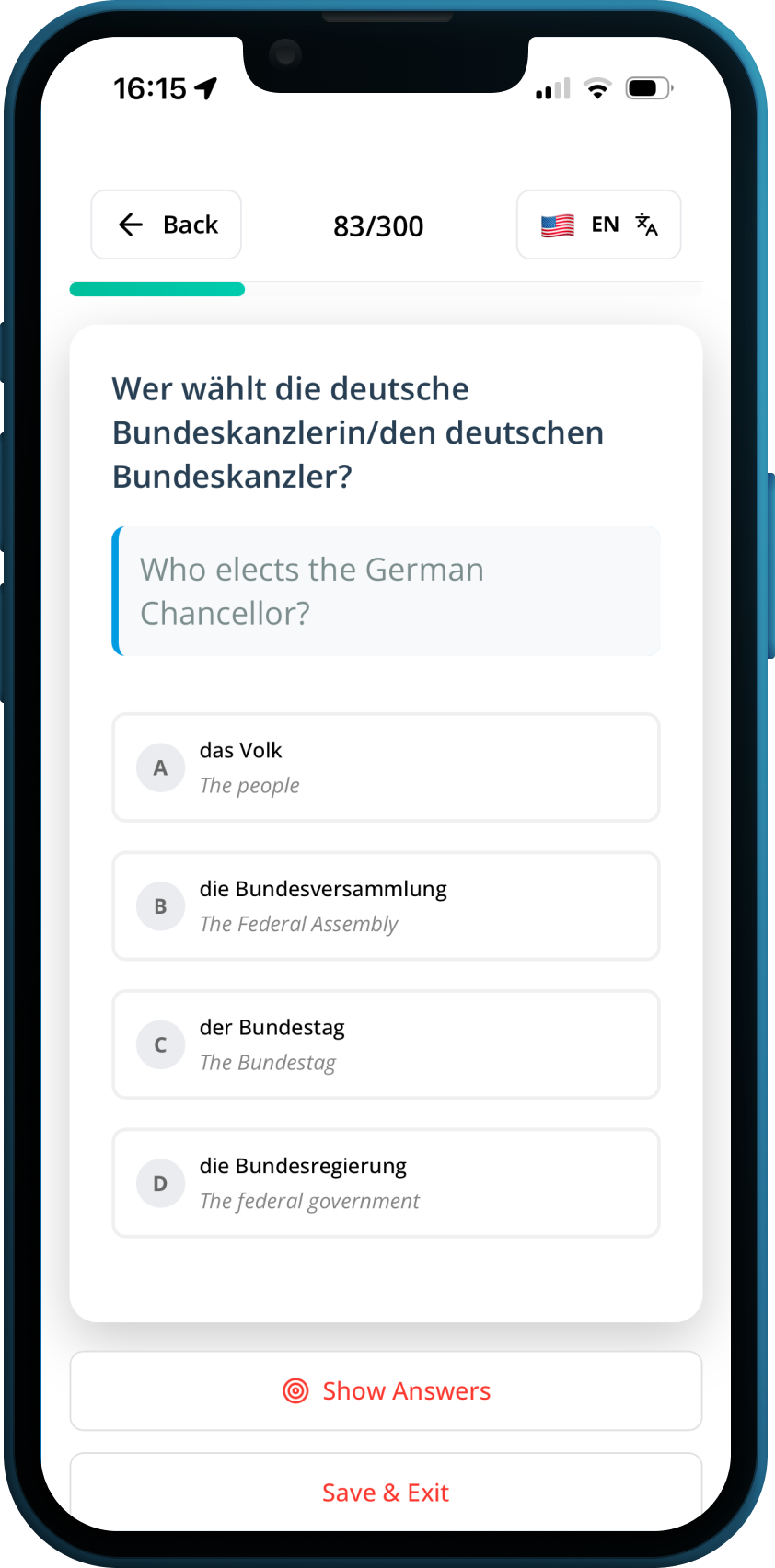
Translations
Approach: Embedded multilingual support directly into the question flow without altering exam structure.
Rationale: Language barriers increased cognitive load and distorted performance. Treating translations as a core UX layer preserved realism while improving comprehension.
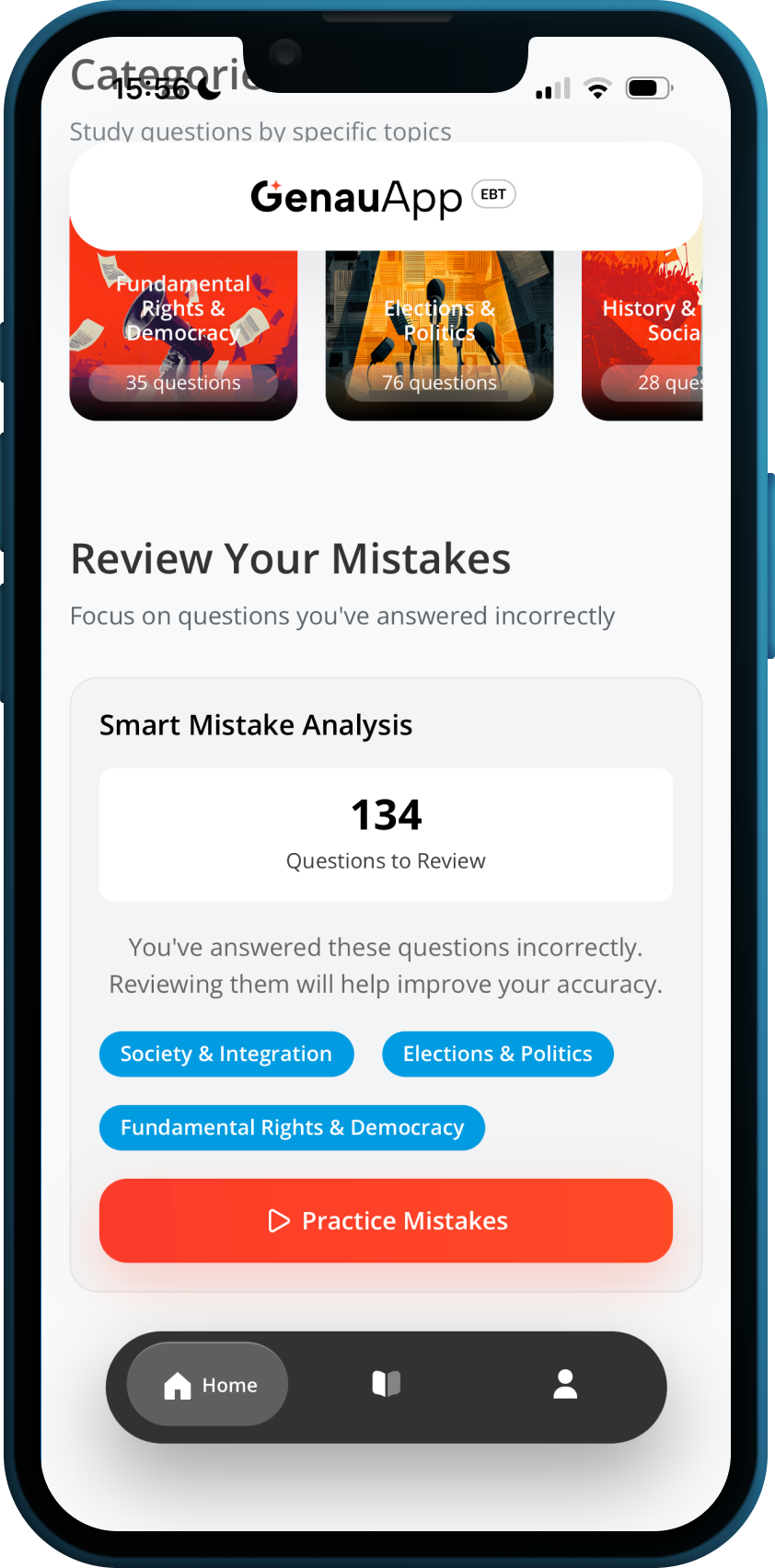
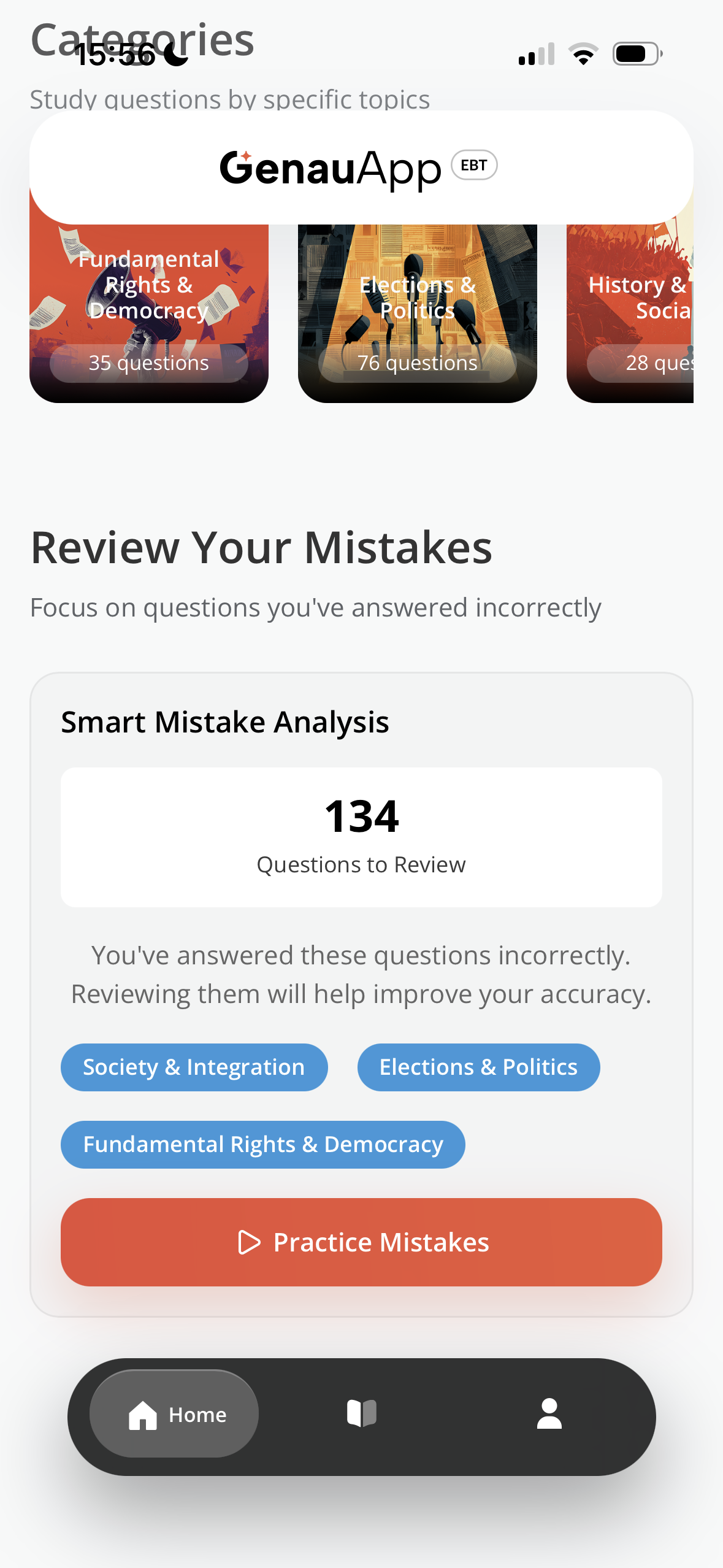
Mistakes Pool
Approach: Created a focused practice flow based on recurring incorrect answers and weak categories.
Rationale: Repeated exposure to known questions wasted time and energy. Surfacing meaningful mistakes enabled more efficient preparation and faster confidence gains.tions.Turns errors into targeted learning opportunities.
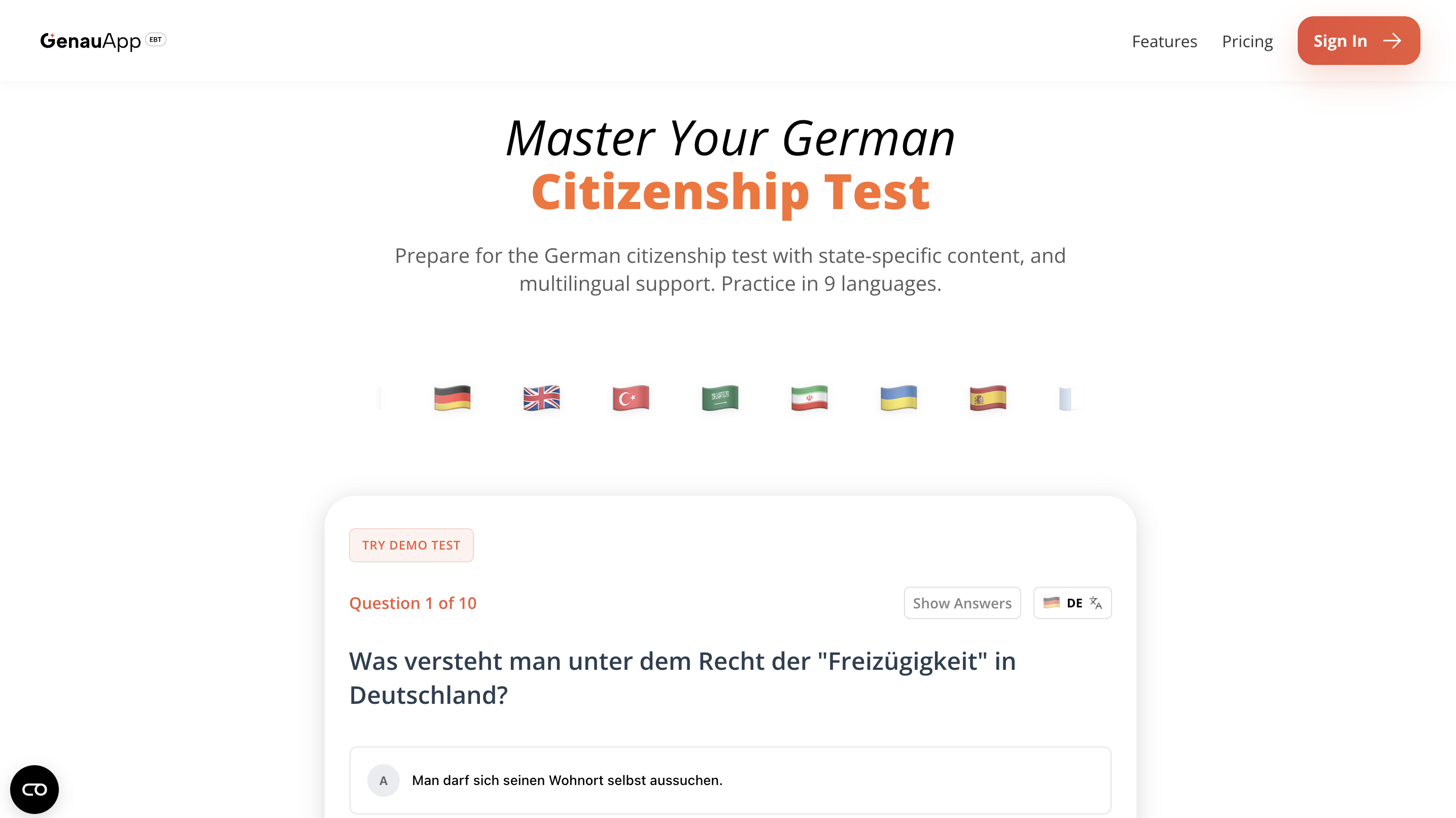
Situation
Early in the project, we explored a landing page–led acquisition flow to introduce the Einbürgerungstest product and convert users before hands-on usage.
Task
The goal was to validate whether clear value proposition and messaging alone could drive user sign-ups in a high-stakes exam preparation context.
Action
We designed and shipped a focused landing page, tracked sign-in behavior, and analyzed drop-off points before users entered the product experience.
Result
Sign-in rates remained low, indicating that users were unwilling to commit without first experiencing tangible value. This insight led to deprioritizing the landing page and shifting toward experience-first entry points that reduced friction and built trust earlier.
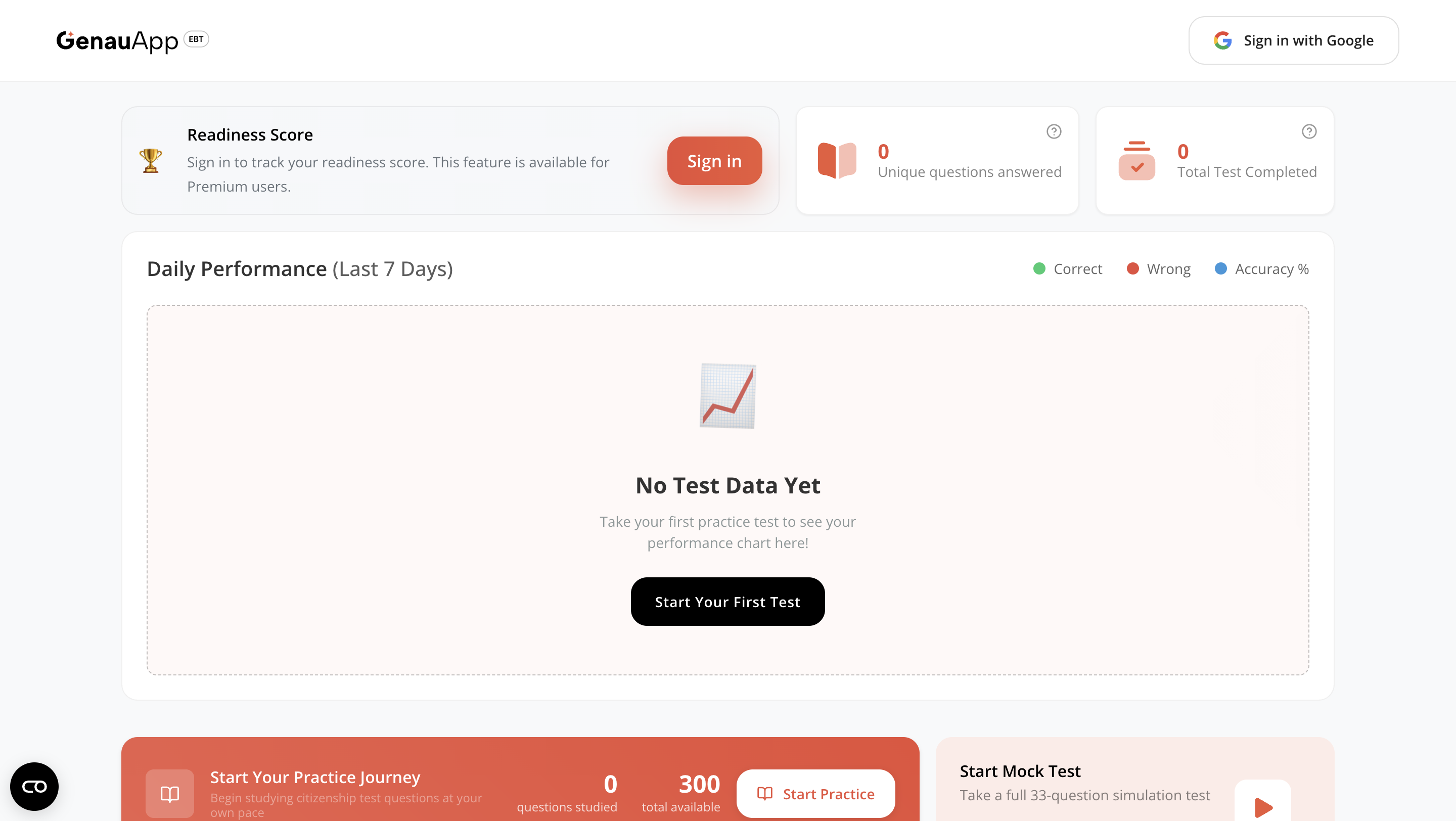
Situation
Early in the project, we tested a landing page–led acquisition flow to introduce the Einbürgerungstest product and drive sign-ups.
Task
Validate whether a value-proposition–driven landing page could convert users before they experienced the product.
Action
After observing low sign-in rates, we repositioned the landing page as an SEO-focused entry point and redirected users to the main product experience instead of gating access behind registration. This allowed users to explore mock tests and core flows before committing.
Result
Lowering the entry barrier significantly improved conversion rates and increased mock test completion. Users engaged more meaningfully with the product, leading to higher confidence and stronger downstream commitment.
Conversion Rate
Increase in users reaching the core product experience after redirecting landing page traffic directly to the main flow.
Mock Test Completion
Higher mock test completion rates after removing upfront registration and surfacing immediate value.
Early Drop-off
Reduction in early funnel drop-off caused by sign-in friction.
Guest Completion Funnel
Guest users who started a test completed it without signing in.
The product shifted from a static question bank to a decision-support tool for a high-stakes life event.
What worked
Reframing exam preparation around readiness instead of completion significantly improved user confidence and engagement. Clear separation between practice and exam modes reduced anxiety and aligned the experience with real exam expectations.
What did not worked
An early landing page–led acquisition approach underperformed. Despite clear messaging, very few users completed sign-in, revealing that users were unwilling to commit before experiencing concrete value.
Key learnings
High-stakes preparation products require trust and immediate value before commitment. Users needed to experience clarity and guidance first, rather than being asked to create an account upfront.
Strategic Pivot
Based on these learnings, the strategy shifted toward lowering entry barriers, exposing sample experiences earlier, and aligning acquisition flows with user intent. A shared data dashboard enabled faster alignment and informed subsequent iterations.
The product shifted frThis project required hands-on execution across design and implementation. Beyond shaping the product experience, I was directly involved in building the frontend, backend, and database structures needed to support a scalable exam preparation system. Working close to the code allowed faster iteration, fewer handoff gaps, and tighter alignment between design intent and product behavior.
Technical Ownership & Execution Depth
I owned not only the experience design but also the end-to-end implementation of the product. This included shaping frontend architecture, backend logic, and database structure to support scalable exam preparation flows.
Frontend & Interaction Implementation
The frontend was built to support multiple user modes, large question sets, and multilingual content without compromising performance or clarity. UX decisions were tightly coupled with implementation details, allowing faster iteration and fewer handoff gaps between design and code.
Backend & Data Modeling
The backend required defining strict data schemas for questions, answers, categories, and user progress. Designing these structures early was critical to avoid inconsistencies, enable analytics, and support future personalization and planning features..
Why This Matters
Taking full technical ownership reduced translation loss between design intent and implementation reality. It enabled faster decision-making, deeper system understanding, and more resilient product foundations—especially important in a small-team, high-ambiguity environment.


